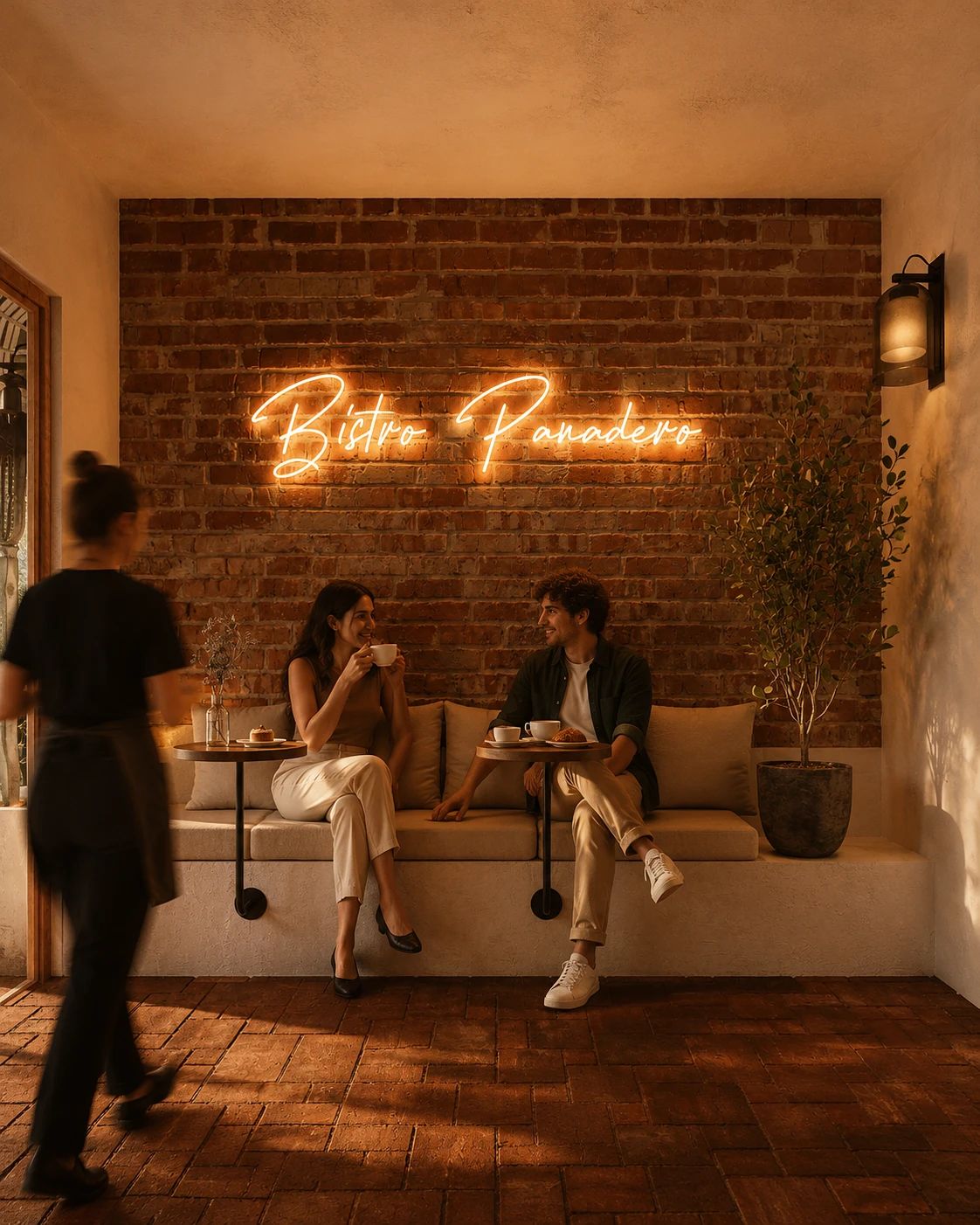
A bakery that wanted to become a café without becoming a different business. Two rhythms in one small room: production from four in the morning, service from seven — and a counter that had to do both jobs without ever looking like a back-of-house.
Make the production the display. The oven wall stays open to the room and the counter runs straight off it, so the bread travels three metres from rack to hand. Seating sits deliberately low and loose around it — nothing fixed, nothing that turns the room into a restaurant.
The café reads as a bakery that lets you stay, which is what it is. Morning production is visible to the first customers instead of hidden from them, and the same room turns over four times a day.
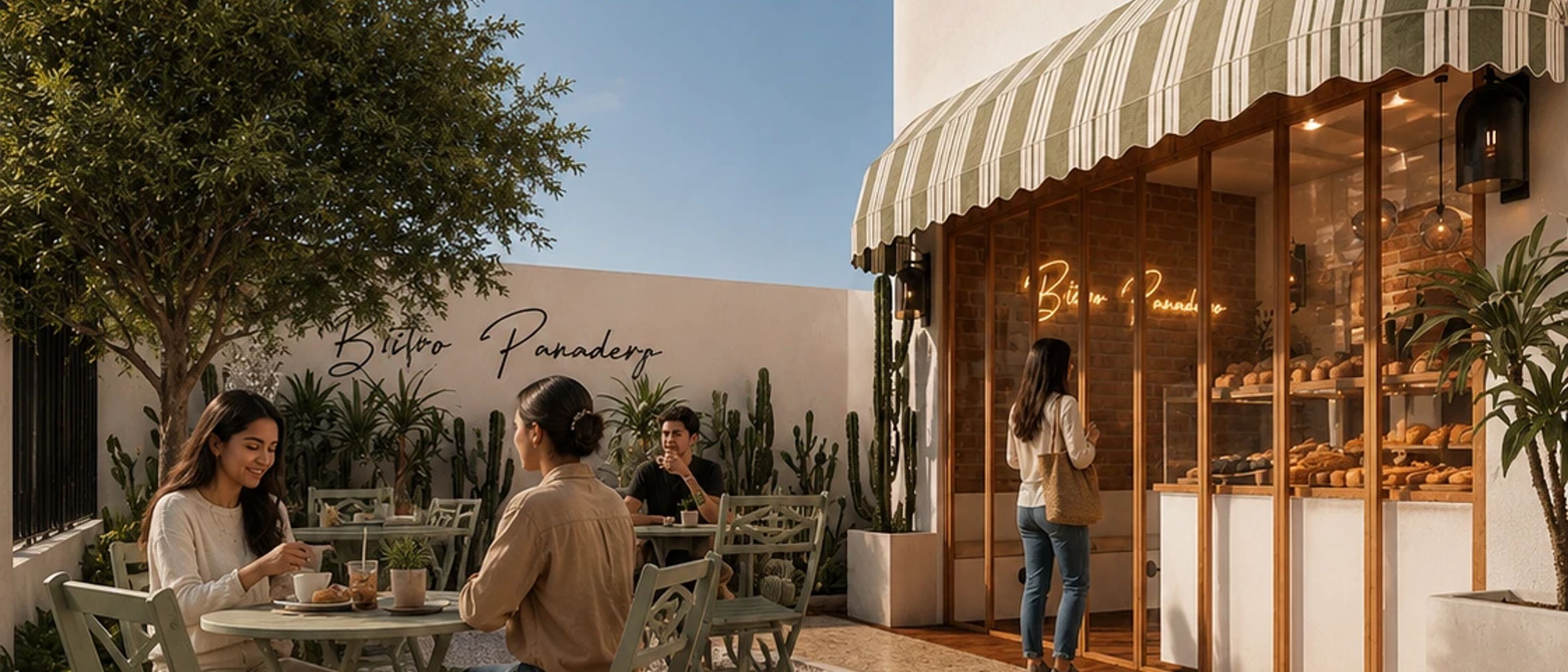
The room is small enough that acoustics decide whether it is pleasant. Cork underfoot, a plaster ceiling with depth, and open shelving that breaks up the reflections — so a full house at nine in the morning sounds busy rather than loud.


Everything in the room is on wheels or on brackets. The client changes the layout twice a day — tables out for the morning rush, pulled back for afternoon work — and the design assumes it rather than resisting it.
The palette is three materials and no more: terrazzo, pale oak, lime plaster. In a room this size, a fourth material would have been noise.